At is at least a footnote to the late Alexander Haig's long and distinguished career that his missteps played an important role in the rise of the modern vice presidency. Haig gave a speech in which he announced that he was the "vicar" for foreign policy. The Reagan administration, watching the growth of the National Security Council and its head in the Nixon and Carter administrations, did seek to downgrade the National Security Advisor and elevate the Secretary of State. But Haig really could not play nice with the other kids and seemed to think he was President of Foreign Policy. He tried to tell Reagan what to do and he fought with the National Security Advisor over running the crisis management group at the NSC.
The White House response was an interesting one. They gave the job to Vice President Bush. Giving into Haig would have looked bad and completely undercut NSA Richie Allen. But if Haig dug in his heels, Allen would not have been able to hold his own in bureaucratic combat with Haig. In giving the position to Bush the job went to someone that Haig didn't outrank.
Bush, by most accounts, was quite capable in the position. His best performance was on the day Reagan was shot. Haig severely tarnished an impressive reputation with his performance that day, where he gave a press conference announcing that he was in charge.
First off, he was actually wrong - succession does not go from the President to the VP to the Secretary of State (it did initially, but the Constitution was amended on this point.) The Speaker of the House and President Pro Tem of the Senate are in line first. Second, with the President and VP still alive succession does not occur at all. One can understand Haig's thinking. If the attack on the President were just part of a multi-pronged plan and enemies were to attack, someone would need to take command. But our ship of state is not ship, where someone has to be officially standing on the bridge.
Informally, someone does need to be coordinating affairs, but taking that stance publicly is not acceptable. It is surprising that Haig did not have a better sense of this, he had served as White House Chief of Staff in the waning days of the Nixon administration and many referred to him as the defacto president. He played this role without leaping into the limelight. (This had happened before. When Woodrow Wilson was laid up with a stroke the Secretary of Treasury ran cabinet meetings. When Wilson recovered, he promptly fired his rebellious cabinet officer.)
Vice President Bush, in contrast, was extremely prudent that day. He did not make excessive public statements and symbolically denied taking charge. When plans were made to helicopter him to the White House, Bush refused saying that only the President lands on the South Lawn. Bush took his motorcade to the Vice President's residence sending a signal to the American people that the government was functioning normally and not in crisis.
Analysis
Thanks to Haig, both in his battles to control foreign policy and his overstepping when Reagan was shot, Bush received expanded opportunities to participate in the administration. While Reagan and Bush met regularly and Bush had a clear line into the White House through the Chief of Staff, a long-time friend, Jim Baker, it was not clear that this would have allowed him to play a substantial role. He was not seen as an ideological Reaganite - coming from the other end of the party. While Mondale established the modern vice presidency, it might have died with the Carter administration's failure to win re-election. Instead Bush was given the chance to manage an important national security role and later took on other national security tasks such as the Terrorism Commission which set policy and the South Florida Task Force.
Update
The illustrious Christopher Hitchens illustrates some of my points about how Haig's power-grabbing led to George Bush's elevation to running the crisis management group. In other regards, Hitchens saw Haig as delusional and power mad (and he isn't alone in this assessment - the man worked with MacArthur and Nixon). He would probably think that I am being far too charitable to Haig and his infamous press conference. I still think Haig's military background, thinking that at all times someone has to be in the captain's chair, shaped the event.
Sunday, February 21, 2010

Friday, February 19, 2010
Academic Take on Veep v. Veep
Veep v. veep has been an interesting Washington game – as Vice President Biden plays the central role in rebutting his predecessor’s argument that the Obama administration isn’t taking terrorism seriously. The merits of this discussion aside, the affair highlights some interesting aspects about the Vice President’s role.
Diplomatic Battleship
Administration spokesperson is a central VP role. But it has to be used carefully. Sending the VP is the PR/diplomatic equivalent of sending a battleship – it will make news worldwide. There is a reason it is called gunboat diplomacy, not battleship diplomacy. A battleship overplays the hand and if it falters it will trigger a major crisis – in the case of the VP the risk is that the administration will look stupid.
Presidents and Vice Presidents are free, and expected, to address the public on issues. But Presidents do not directly debate administration critics, it is beneath the dignity of the office and there are ample surrogates (spokesman, cabinet members etc.) to do this job. Vice Presidents are also frequently deployed to deliver red meat speeches to the faithful and stump for local candidates (Nixon pioneered this role.) But that is different from directly debating with critics.
So when do you send a battleship?
When the other side has a battleship too. If the specific critic has national standing (which is rare since former Presidents are generally careful not to criticize their successors), the vice president, as the only other nationally elected figure might be the appropriate administration champion. The other prominent example of a VP taking on a specific critic was when Al Gore debated Ross Perot about NAFTA in 1993. Perot accused President Clinton of ”sending someone else to do your dirty work.” Perot had run a strong third in the 1992 Presidential elections (and in fact Clinton probably owed his victory to disgruntled Republicans who became Perot supporters.) The strategy paid off, Gore decimated a poorly prepared Perot.
Ex-VP as National Figure
The converse of using the VP to counter a national level political critic is the rise of the role of the ex-VP as a possible national level critic.
Tom Ricks is a well-regarded defense expert. But he also knows something about the vice presidency. His recent post referred to Charles Curtis (Herbert Hoover’s VP, who is most famous for being part Native American) and compared his criticisms of FDR to Cheney's criticisms of the Obama administration.
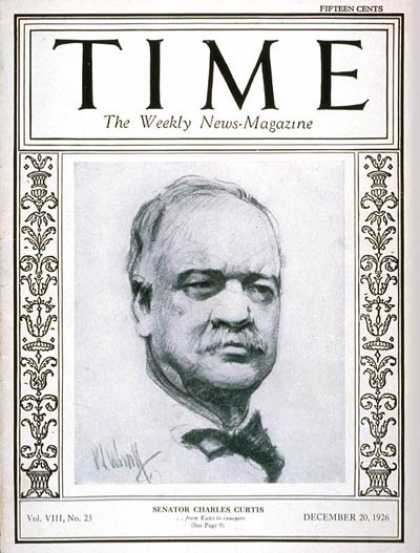
Unlike Cheney, Curtis was a DC non-entity as vice president (a good bio from the Senate Historian can be found here). Previously, he had been a major figure on the Hill (rising to Senate Majority Leader), but he was from the opposite end of the party from the nominee Herbert Hoover. He was added to the ticket for political balance. Hoover and Curtis didn't get along at all. In fact Curtis inspired the character Throttlebottom, in the Gershwin musical – a vice president who could only get into the White House on public tours. Quite the opposite of Cheney. I’ll have to do more research – but the fact that Curtis became chair of the Republican Senatorial campaign committee in 1935 indicates that he became a sort of defacto party chief/spokesman – leading a rear guard action against the Roosevelt revolution. (Not much came of this and Curtis died in February 1936.)
Curtis ended up being the last man standing in a leaderless rudderless party, so he became in effect the national figure – this despite has having little to do with the previous administration’s policies.
Conclusions
The basic guide of bureaucratic politics is “where you sit is where you stand” or more academically – your position shapes your perspective. The VP has almost no inherent bureaucratic interests (with a relatively small staff and no core policy portfolio.) But the national standing does seem to count for something – maybe part of my thesis will be nailing down exactly what.
It is worth noting that ex-VPs can’t always translate this into influence – Quayle for example. Obviously Quayle’s perceived shortcomings played a role, but so did the structure of the Republican party which is hierarchical and top-down. There is usually a pretty clear line of who get to be President in the GOP. Ford won the nomination in 1976, edging out Reagan. Reagan was next in line, his chief rival was Bush (who became his VP.) Bush’s chief rival and the "senior national Republican figure” was Senate Leader Bob Dole who won the 1996 nomination. Then there was a bit of a vacuum and W. won the nomination, edging out McCain – who was the nominee in 2008. Curtis had been a leading rival to Hoover and the Senate Majority Leader in his own right – he was next in line. But now, the Republican party is in a bit of disarray and Cheney is the last man standing - leaving him a platform to be critic-in-chief.
Diplomatic Battleship
Administration spokesperson is a central VP role. But it has to be used carefully. Sending the VP is the PR/diplomatic equivalent of sending a battleship – it will make news worldwide. There is a reason it is called gunboat diplomacy, not battleship diplomacy. A battleship overplays the hand and if it falters it will trigger a major crisis – in the case of the VP the risk is that the administration will look stupid.
Presidents and Vice Presidents are free, and expected, to address the public on issues. But Presidents do not directly debate administration critics, it is beneath the dignity of the office and there are ample surrogates (spokesman, cabinet members etc.) to do this job. Vice Presidents are also frequently deployed to deliver red meat speeches to the faithful and stump for local candidates (Nixon pioneered this role.) But that is different from directly debating with critics.
So when do you send a battleship?
When the other side has a battleship too. If the specific critic has national standing (which is rare since former Presidents are generally careful not to criticize their successors), the vice president, as the only other nationally elected figure might be the appropriate administration champion. The other prominent example of a VP taking on a specific critic was when Al Gore debated Ross Perot about NAFTA in 1993. Perot accused President Clinton of ”sending someone else to do your dirty work.” Perot had run a strong third in the 1992 Presidential elections (and in fact Clinton probably owed his victory to disgruntled Republicans who became Perot supporters.) The strategy paid off, Gore decimated a poorly prepared Perot.
Ex-VP as National Figure
The converse of using the VP to counter a national level political critic is the rise of the role of the ex-VP as a possible national level critic.
Tom Ricks is a well-regarded defense expert. But he also knows something about the vice presidency. His recent post referred to Charles Curtis (Herbert Hoover’s VP, who is most famous for being part Native American) and compared his criticisms of FDR to Cheney's criticisms of the Obama administration.
Unlike Cheney, Curtis was a DC non-entity as vice president (a good bio from the Senate Historian can be found here). Previously, he had been a major figure on the Hill (rising to Senate Majority Leader), but he was from the opposite end of the party from the nominee Herbert Hoover. He was added to the ticket for political balance. Hoover and Curtis didn't get along at all. In fact Curtis inspired the character Throttlebottom, in the Gershwin musical – a vice president who could only get into the White House on public tours. Quite the opposite of Cheney. I’ll have to do more research – but the fact that Curtis became chair of the Republican Senatorial campaign committee in 1935 indicates that he became a sort of defacto party chief/spokesman – leading a rear guard action against the Roosevelt revolution. (Not much came of this and Curtis died in February 1936.)
Curtis ended up being the last man standing in a leaderless rudderless party, so he became in effect the national figure – this despite has having little to do with the previous administration’s policies.
Conclusions
The basic guide of bureaucratic politics is “where you sit is where you stand” or more academically – your position shapes your perspective. The VP has almost no inherent bureaucratic interests (with a relatively small staff and no core policy portfolio.) But the national standing does seem to count for something – maybe part of my thesis will be nailing down exactly what.
It is worth noting that ex-VPs can’t always translate this into influence – Quayle for example. Obviously Quayle’s perceived shortcomings played a role, but so did the structure of the Republican party which is hierarchical and top-down. There is usually a pretty clear line of who get to be President in the GOP. Ford won the nomination in 1976, edging out Reagan. Reagan was next in line, his chief rival was Bush (who became his VP.) Bush’s chief rival and the "senior national Republican figure” was Senate Leader Bob Dole who won the 1996 nomination. Then there was a bit of a vacuum and W. won the nomination, edging out McCain – who was the nominee in 2008. Curtis had been a leading rival to Hoover and the Senate Majority Leader in his own right – he was next in line. But now, the Republican party is in a bit of disarray and Cheney is the last man standing - leaving him a platform to be critic-in-chief.
Tuesday, January 19, 2010
The VP & the Whole Equation
They usually regret it, because I will give an unsolicited lecture at the slightest provocation. The obvious answer is that the position has grown exponentially in importance within my lifetime and the Cheney vice presidency (or co-presidency in they eyes of some) has made the topic particularly “hip” from an academic standpoint. All of this is completely true.
But it isn’t the complete answer.

In his final novel, The Last Tycoon, F. Scott Fitzgerald wrote of Hollywood that it,
Yet Essence if Decision is a very limited case study. It was a highly focused situation over a specific period of time, which quickly took priority over all others, where the President had tremendous discretionary power, and many potential players were not part of the process. Most issues are far more complex and involve balancing priorities between an even greater range of actors including Congress and domestic interests. These problems are multiplied exponentially in foreign affairs because the bureaucracies and politics of other countries need to be taken into account. For example, I am currently reading Richard Neustadt’s classic The Skybolt Crisis in Perspective. JFK cancelled a missile program in order to cut the defense budget – but the missile program was crucial to the British because it was the only way for them to maintain their independent nuclear deterrent. Losing this deterrent could have led the British government to fall, and the U.S. needed its British allies on other issues and wasn’t sure the Labor leaders would be as helpful. But the alternative to Skybolt, submarine-based Polaris missiles, would hurt British integration with Europe – which, among other things, could potentially have led to a nuclear power Germany (this was written less than 20 years after WWII.)
In addition, decisions themselves aren’t single, solitary events and are often made with limited information. In the course of setting policy multiple decisions are made - some incredibly important, others seemingly relatively minor. Yet the minor decisions can have enormous consequences. Consider the “slam-dunk” of Saddam’s WMD? The major issue was whether or not to invade Iraq. But the seemingly peripheral issue of providing the moral/legal basis of the war was, at the time, not seen as a significant issue and made without rigorous analysis. When no WMD was found the administration’s credibility suffered a massive. What was the process in which a major possibility (that Saddam didn’t have WMD) was not carefully considered?
So, in effect, I want to get a glimpse at the broad process in which policy is made and implanted – the whole equation.
Why the Veep?
Why not?
Sometimes an important component in the equation, quite simply, a key person wasn’t in the room. The VP is a relatively new guy in the room. From relative obscurity, the VP has, for the past 35 years, been a major player. But there is nothing inherent about this role. The VP does not have the power of a cabinet department. At the same time, the VP is not locked into a position by a department. The VP is a protean figure that is shaped by what the President needs. But the VP is also a highly experienced figure that can give the President a broad perspective that incorporates the political, personal (FDR was famously hungry for gossip), and strategic.
Seeing how the Vice Presidency has emerged as a power-base and been used, both by its holders and by Presidents, to advance fortunes and positions seems like an excellent angle from which to catch a glimpse of the whole equation.
But it isn’t the complete answer.
In his final novel, The Last Tycoon, F. Scott Fitzgerald wrote of Hollywood that it,
"can be understood … but only dimly and in flashes. Not half a dozen men have ever been able to keep the whole equation of pictures in their heads."Hollywood is a complicated place, but it is dwarfed by the complexity of the United States government. Major political decisions are made on so many levels. The political science classic Essence of Decision gives a glimpse into this phenomenon. The author, Graham Allison (joined in updated editions by Phil Zelikow – of the 9/11 Commission) looks at the decision-making process during the Cuban Missile Crisis. He has three basic lenses to turn on the problem. The first is the rational actor – that is a unified state advancing its interests – in effect the geopolitical chessboard. The second lens is the organizational dynamics, the inputs and outputs of the major bureaucracies involved in the problem, which shape the information available and the options open to policy-makes. Finally, there is the bureaucratic politics model, which focuses on the policy and personality of the people involved in the decision – each with their own interpretation of national interest and their own “turf” to defend.
Yet Essence if Decision is a very limited case study. It was a highly focused situation over a specific period of time, which quickly took priority over all others, where the President had tremendous discretionary power, and many potential players were not part of the process. Most issues are far more complex and involve balancing priorities between an even greater range of actors including Congress and domestic interests. These problems are multiplied exponentially in foreign affairs because the bureaucracies and politics of other countries need to be taken into account. For example, I am currently reading Richard Neustadt’s classic The Skybolt Crisis in Perspective. JFK cancelled a missile program in order to cut the defense budget – but the missile program was crucial to the British because it was the only way for them to maintain their independent nuclear deterrent. Losing this deterrent could have led the British government to fall, and the U.S. needed its British allies on other issues and wasn’t sure the Labor leaders would be as helpful. But the alternative to Skybolt, submarine-based Polaris missiles, would hurt British integration with Europe – which, among other things, could potentially have led to a nuclear power Germany (this was written less than 20 years after WWII.)
In addition, decisions themselves aren’t single, solitary events and are often made with limited information. In the course of setting policy multiple decisions are made - some incredibly important, others seemingly relatively minor. Yet the minor decisions can have enormous consequences. Consider the “slam-dunk” of Saddam’s WMD? The major issue was whether or not to invade Iraq. But the seemingly peripheral issue of providing the moral/legal basis of the war was, at the time, not seen as a significant issue and made without rigorous analysis. When no WMD was found the administration’s credibility suffered a massive. What was the process in which a major possibility (that Saddam didn’t have WMD) was not carefully considered?
So, in effect, I want to get a glimpse at the broad process in which policy is made and implanted – the whole equation.
Why the Veep?
Why not?
Sometimes an important component in the equation, quite simply, a key person wasn’t in the room. The VP is a relatively new guy in the room. From relative obscurity, the VP has, for the past 35 years, been a major player. But there is nothing inherent about this role. The VP does not have the power of a cabinet department. At the same time, the VP is not locked into a position by a department. The VP is a protean figure that is shaped by what the President needs. But the VP is also a highly experienced figure that can give the President a broad perspective that incorporates the political, personal (FDR was famously hungry for gossip), and strategic.
Seeing how the Vice Presidency has emerged as a power-base and been used, both by its holders and by Presidents, to advance fortunes and positions seems like an excellent angle from which to catch a glimpse of the whole equation.
Friday, July 24, 2009
Send the Veep!
Vice President Biden has been taking on a higher profile role in the administration’s foreign policy. He has been travelling around the former Soviet Union, reassuring Ukraine and Georgia – just after the President tried to reset relations with Russia. Just before the Lebanese elections he gave a major speech in Beirut to Lebanon’s parliament. The elections were a setback for Hezbollah, and thus a success for the administration. A few seasoned Middle East experts argued that Biden’s appearance affected the election’s outcome. While other analysts disagreed that Biden had an impact – the mere fact that the debate took place indicates that the appearance was an attempt by the administration to exercise influence.
And of course there was the well-publicized trip to Iraq.
The policy questions are interesting, but this blog is about process and, in particular, what is the Vice President for?

Showing the Flag
Woody Allen once said, “Ninety percent of life is just showing up.” Sending the VP is showing up in style, he (or she) is the diplomatic equivalent of sending a battleship to show the flag. A vice presidential visit is a good way to send the message both to leaders and to publics that the president cares about a given situation. The national security advisor may be an effective messenger to national leaders, but the NSA does not make the news or get parades. An NSA or regional Asst. Secretary of State can visit without much publicity, but a Vice President’s visit is a big deal. At least some components of whatever message needs to be delivered will become public.
This was Biden’s mission in Beirut. He showed the flag, let the people of Lebanon know that their election mattered to the United States and possibly gave the anti-Hezbollah forces a bit more spring in their step. This is a solid and appropriate role that has been played by numerous vice presidents – not only abroad but also domestically. Consider Al Gore’s debating Ross Perot on NAFTA – the president would have looked ridiculous lowering himself by debating Perot. Sending Gore allowed the administration to make its case, without debasing itself (they managed that a bit later.)
But a general doesn’t use his biggest gun on every target. First, the vice president has limited time – he cannot be in two places at once. There are situations that call for quiet and discretion, where the Assistant Secretary of State or even a specific back-channel envoy is more appropriate. (Vice President’s have been back-channels, but usually in the context of highly public events – such as the Gore-Chernomyrdin Commission.)
Another arena in which the President needs to show the flag is within the bureaucracy. The U.S. government is a set of massive organizations each of which have a unique set of complex internal procedures and constituencies. Presidents have to choose very carefully what they hope to change and what kinds of outputs they hope to achieve. On crucial issues they in effect need to “show the flag.” Presidents, Bureaucrats, and Foreign Policy: The Politics of Organizational Reform, by I.M. Destler (who – full disclosure – has the misfortune of being my advisor), was written in 1972 and described difficulties that Presidents and the State Department had been having since the end of World War II. Now, over thirty-five years later, much of what Prof. Destler wrote is remarkably current. In his conclusions, Destler advises that Presidents
This is an interesting question – inside the bureaucracy, where is the VP best positioned to show the flag? Bush I played an inter-agency coordinating role on several national security issues (NSC’s Crisis Management Group, Counterterrorism Commission, and the South Florida Task Force.) He was generally given high marks for this work. Cheney on the other hand appeared to act as the President’s enforcer – say in the recent CIA brouhaha. When this is done, enforcement may be tough to keep quiet.
These are just preliminary thoughts.
And of course there was the well-publicized trip to Iraq.
The policy questions are interesting, but this blog is about process and, in particular, what is the Vice President for?
Showing the Flag
Woody Allen once said, “Ninety percent of life is just showing up.” Sending the VP is showing up in style, he (or she) is the diplomatic equivalent of sending a battleship to show the flag. A vice presidential visit is a good way to send the message both to leaders and to publics that the president cares about a given situation. The national security advisor may be an effective messenger to national leaders, but the NSA does not make the news or get parades. An NSA or regional Asst. Secretary of State can visit without much publicity, but a Vice President’s visit is a big deal. At least some components of whatever message needs to be delivered will become public.
This was Biden’s mission in Beirut. He showed the flag, let the people of Lebanon know that their election mattered to the United States and possibly gave the anti-Hezbollah forces a bit more spring in their step. This is a solid and appropriate role that has been played by numerous vice presidents – not only abroad but also domestically. Consider Al Gore’s debating Ross Perot on NAFTA – the president would have looked ridiculous lowering himself by debating Perot. Sending Gore allowed the administration to make its case, without debasing itself (they managed that a bit later.)
But a general doesn’t use his biggest gun on every target. First, the vice president has limited time – he cannot be in two places at once. There are situations that call for quiet and discretion, where the Assistant Secretary of State or even a specific back-channel envoy is more appropriate. (Vice President’s have been back-channels, but usually in the context of highly public events – such as the Gore-Chernomyrdin Commission.)
Another arena in which the President needs to show the flag is within the bureaucracy. The U.S. government is a set of massive organizations each of which have a unique set of complex internal procedures and constituencies. Presidents have to choose very carefully what they hope to change and what kinds of outputs they hope to achieve. On crucial issues they in effect need to “show the flag.” Presidents, Bureaucrats, and Foreign Policy: The Politics of Organizational Reform, by I.M. Destler (who – full disclosure – has the misfortune of being my advisor), was written in 1972 and described difficulties that Presidents and the State Department had been having since the end of World War II. Now, over thirty-five years later, much of what Prof. Destler wrote is remarkably current. In his conclusions, Destler advises that Presidents
…a bureaucratic political strategy which seeks to build centers of strength responsive to the President at as many levels and places within the bureaucracy as possible.Fancy speak, for cadres up and down the bureaucratic ranks who can “show the flag,” that is remind people what the President wants to see done. It should be understood, that most of the denizens of massive bureaucracies are not opposed to the President, whoever it is. But managers in government agencies don’t usually hear much from the President and are much more likely to regularly hear from other constituencies such as congress, the media, interest groups, other agencies and in the case of foreign affairs, other countries.
This is an interesting question – inside the bureaucracy, where is the VP best positioned to show the flag? Bush I played an inter-agency coordinating role on several national security issues (NSC’s Crisis Management Group, Counterterrorism Commission, and the South Florida Task Force.) He was generally given high marks for this work. Cheney on the other hand appeared to act as the President’s enforcer – say in the recent CIA brouhaha. When this is done, enforcement may be tough to keep quiet.
These are just preliminary thoughts.
Wednesday, July 22, 2009
My Favorite Veep
Any guesses?
Put your guess in the comment section. The winner gets a signed copy of my dissertation when it comes out as a book. Seriously!
Of course you might have to wait until about 2022.
Although hopefully it should be ready before then, otherwise my wife will kill me.
Update: Rules, Caveats etc.
Everyone who guesses right gets a copy. So feel free to copy other guesses. I'll allow three guesses per person. So if you are confident and think a signed copy of my thesis will be valuable, go ahead and guess Schuyler Colfax three times.
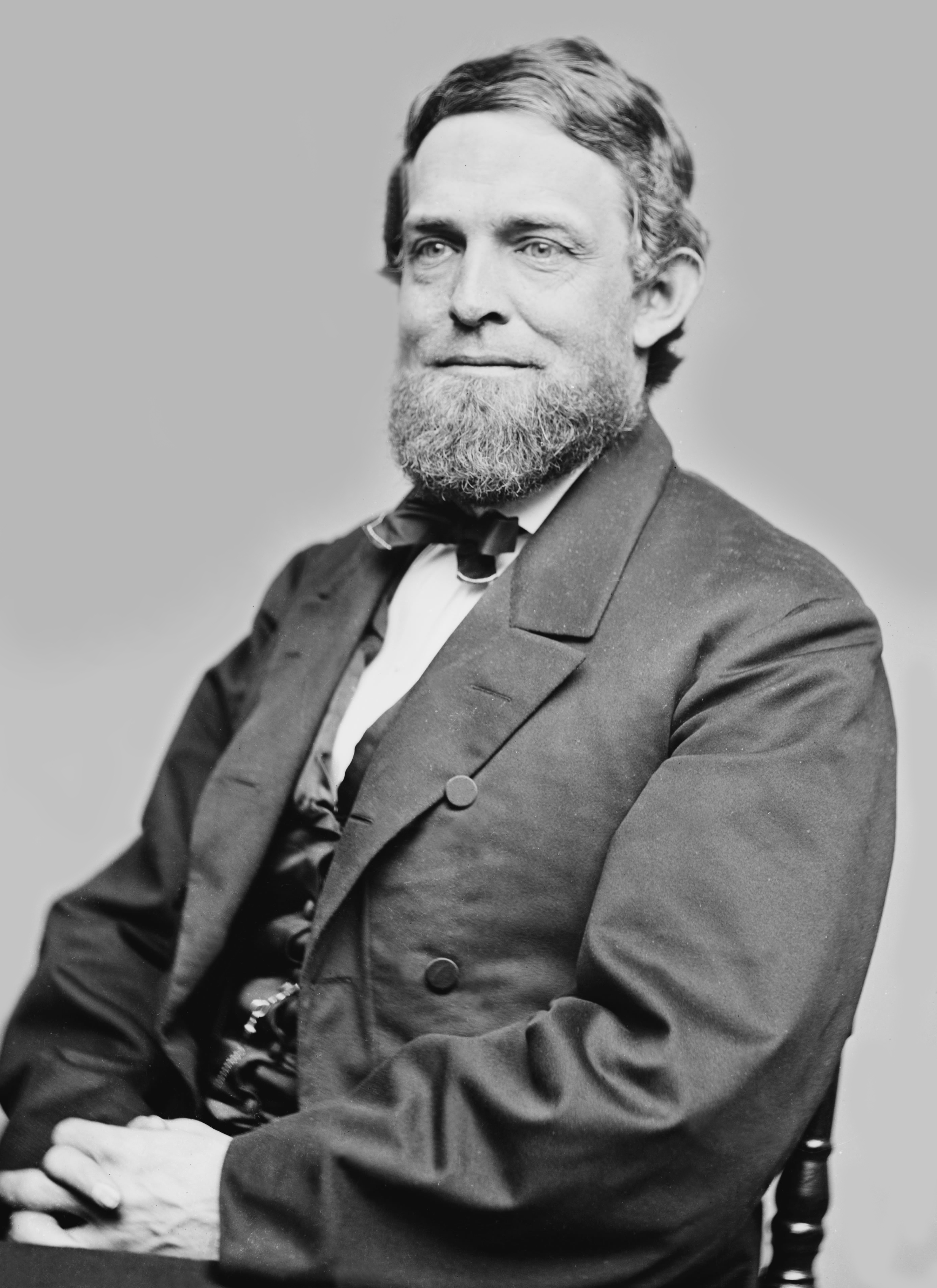
(Ah, to live in the good old days of dramatic facial hair!)
Anyway, I'll close the polls on July 31.
Put your guess in the comment section. The winner gets a signed copy of my dissertation when it comes out as a book. Seriously!
Of course you might have to wait until about 2022.
Although hopefully it should be ready before then, otherwise my wife will kill me.
Update: Rules, Caveats etc.
Everyone who guesses right gets a copy. So feel free to copy other guesses. I'll allow three guesses per person. So if you are confident and think a signed copy of my thesis will be valuable, go ahead and guess Schuyler Colfax three times.
(Ah, to live in the good old days of dramatic facial hair!)
Anyway, I'll close the polls on July 31.
Thursday, July 9, 2009
Biden Between: VP as Coordinator
Vice President Biden’s appearance on George Stephanpoulos’ Sunday morning show has had substantial repercussions, both for Biden’s comments on the possibility of Israel striking Iran and that the extent of the economic downturn has surprised the administration. While these comments have excited much twittering, blogging and punditry – this outlet is interested in the question of what does the vice president do?
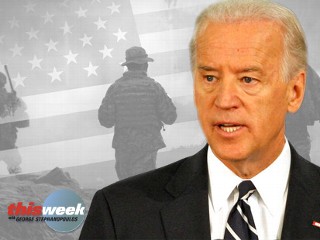
The first thing the VP does is agree with the President in public at all times. Throughout the interview, whenever Stephanopoulos asked about Biden’s position in the internal debates, Biden rebuffed him saying that the President’s plan was the right one. Biden’s appearance was in the backdrop of a major mission to Iraq as a high-level emissary and in the interview some other tasks were also discussed.
Turf wars are part of the process and unavoidable. The trick is to manage them, Coordination, according to Harold Seidman is the “twentieth-century equivalent of the medieval search for the philosopher’s stone… If only we can find the right formula for coordination, we can reconcile the irreconcilable, harmonize competing and wholly divergent interests, overcome irrationalities in our government structures, and make hard policy choices to which no one will dissent.”
However, in his masterful Bureaucracy: What Government Agencies Do and Why They Do It James Q. Wilson writes that the most successful coordinating bodies have served as adjudicators and focused on settling policy disputes between agencies. It did not compete with agencies or attempt to alter their operations. The most important component in making this operation work however, is support from the President. The agency chiefs must be clear that end runs to the President on the topic are unacceptable.
It appears that this is the role Biden is playing in the station chief dispute. It is a good use of an experienced politician and other VPs have prospered in it. Whether the Biden’s Iraq mission or role in overseeing the stimulus package also follow this model are another question.
The first thing the VP does is agree with the President in public at all times. Throughout the interview, whenever Stephanopoulos asked about Biden’s position in the internal debates, Biden rebuffed him saying that the President’s plan was the right one. Biden’s appearance was in the backdrop of a major mission to Iraq as a high-level emissary and in the interview some other tasks were also discussed.
STEPHANOPOULOS: So you're in charge of the stimulus. You're the president's envoy here in Iraq. You're supposed to settle this dispute between the director of national intelligence and the CIA over who is going to appoint the station chiefs. By the way, have you solved that one yet?A number of interesting points here. First, is the last – that every task has an end date. Ongoing responsibilities become albatrosses that rivals can use to sideline the VP (ask the late Nelson Rockefeller). From a bureaucratic politics standpoint, Biden’s role adjudicating between the DNI and CIA over the appointment of station chiefs is particularly interesting. Some useful background on why this was important is here.
BIDEN: I think we've solved that one.
STEPHANOPOULOS: You have?
BIDEN: Well, let me put it this way. I think we're well on the way to that being solved.
STEPHANOPOULOS: Who won?
BIDEN: They both won.
STEPHANOPOULOS: So they're going to share the responsibility to appoint to station chiefs?
BIDEN: Not done yet. Let me comment on that next week to you.
STEPHANOPOULOS: OK. Well, let me get to the broader point then. You've fixed -- you say you've fixed a problem that will?
BIDEN: Well they fixed the problem.
STEPHANOPOULOS: ? to find out that they fixed the problem -- look to find out the details on all of that. But you've got all of these discrete projects now. And when you came in you talked a lot about how you didn't want to get bogged down in individual projects because you wanted to be, you know, the president's primary adviser.
Are you're worried you're going to far in the other direction?
BIDEN: No. Because all of these projects have end dates on them. You know, they all have sell-by dates, because -- and that's I think that -- I hope I've brought some real expertise to this job, available to the president.
The things he has asked me to do. I hope I'm relatively good at. And -- but all of them have specific objectives.
Turf wars are part of the process and unavoidable. The trick is to manage them, Coordination, according to Harold Seidman is the “twentieth-century equivalent of the medieval search for the philosopher’s stone… If only we can find the right formula for coordination, we can reconcile the irreconcilable, harmonize competing and wholly divergent interests, overcome irrationalities in our government structures, and make hard policy choices to which no one will dissent.”
However, in his masterful Bureaucracy: What Government Agencies Do and Why They Do It James Q. Wilson writes that the most successful coordinating bodies have served as adjudicators and focused on settling policy disputes between agencies. It did not compete with agencies or attempt to alter their operations. The most important component in making this operation work however, is support from the President. The agency chiefs must be clear that end runs to the President on the topic are unacceptable.
It appears that this is the role Biden is playing in the station chief dispute. It is a good use of an experienced politician and other VPs have prospered in it. Whether the Biden’s Iraq mission or role in overseeing the stimulus package also follow this model are another question.
Sunday, June 7, 2009
Rise of the XVP
For a VeepGeek such as yours truly, the fascinating thing about Cheney v. Obama is not the content – it is that anyone cares what an ex-Vice President thinks at all.
Ex-Presidents have a certain amount of standing (even Gerald Ford). They have generally acted with great discretion in criticizing their successors, but they have been given deference on the national stage and had access to the public sphere when they wanted it. Fair enough.
But Vice Presidents? Hardly, they generally faded into obscurity, unless they won an elected office in their own right (the Presidency of course, but also like Humphrey who returned to the Senate.)
While the evolution of the Vice Presidency started with Mondale, the evolution of the ex-Vice President is of even more recent vintage. True, Clinton appointed Mondale ambassador to Japan. This was a substantial role and the Japanese were impressed that such a distinguished individual had been sent, but it was not a first. Vice Presidents had been appointed Ambassador before. Charles Dawes was Ambassador to Great Britain and played a substantial diplomatic role. Dawes was an enormously talented technocrat. Lincoln’s Vice President, Hannibal Hamlin was appointed Ambassador to Spain. This was primarily done in order to give the aged Hamlin a grand tour of Europe – a lovely parting gift. Hamlin observed that in Europe he was taken as a great personage for having been Vice President.
Vice President Bush became President Bush. Vice President Quayle, when his own presidential ambitions fizzled, faded into obscurity. Gore was a unique case in that he nearly won the Presidency and did win a Nobel Prize (and an Academy Award) – so his status as a virtual ex-President is unique.
Cheney did not win anything and is incredibly unpopular. Yet, he managed to drive the debate – taking on Obama in the court of public opinion and, while not exactly winning, not losing either. Some of this may reflect a vacuum in the Republican leadership and some may reflect Cheney’s very lack of popularity and electoral ambition, which allows him greater freedom in what he says. Perhaps his status as the almost co-President contributes to his standing.
Still, at this point identifying any trends about ex-Vice Presidents seems pre-mature and I intend to finish my thesis before any more data points present themselves.
Subscribe to:
Posts (Atom)