Sunday, February 21, 2016

Belated President's Day - Some Lists of Great and Not-so-Greats

The typical Presidential list is of the greatest presidents. That is always Lincoln, Washington, FDR and then whatever particular political hobby-horse the list-maker has. Jefferson, Jackson, TR, Wilson, and Reagan all make regular appearances.

More interesting is listing the worst presidents, although that too is rife with current political judgments. Half of America will say Obama while they other half will say W. Andrew Jackson, who was a giant mere decades ago is now reviled. Nixon was hated, well, for being Nixon. I find this hard because in my humble estimation, our presidents were decent and capable people who did the best they could given the options they had.

So here, instead, are some odd-ball lists.


Unconventional Presidential Rankings

Greatest One-Term Presidents
  1. James K. Polk
  2. George H. W. Bush

Note that both had their big achievements in foreign policy. Other one term presidents include Herbert Hoover, Jimmy Carter, William Howard Taft, Franklin Pierce, Benjamin Harrison, John Adams and John Quincy Adam. Not an inspiring list.

Greatest presidents who took office on presidential death
  1. Teddy Roosevelt
  2. Harry Truman
  3. Chester Alan Arthur
  4. Lyndon Johnson

Teddy Roosevelt was, well, Teddy Roosevelt. Truman too had some pretty huge achievements, establishing the post-World War II architecture and the overseeing the Marshall Plan. Lyndon Johnson was the architect of the Great Society and a champion of civil rights.

Chester Alan Arthur is an interesting outlier - not normally on any presidential list except for great facial hair. He was considered a political hack. He had been appointed head of the NY Customs House (a really, really big deal because most federal government revenue was from taxes on imports and the biggest portion went through NY.) But he was appointed as part of the patronage system and then put on the ticket as VP as a sop to that political machine. (In fairness, he was actually a very capable administrator.) When President Garfield was assassinated, by a disappointed job-seeker, Garfield's political patrons looked forward to taking over the spoils system. But Arthur cut his ties with them and as president championed Civil Service reform. Arthur, surprisingly, turned out to be the president we needed, just when we needed him.


Presidential Achievements Outside the Presidency

Most significant accomplishments as military leader
  1. George Washington
  2. Ulysses S. Grant
  3. Dwight Eisenhower
  4. Andrew Jackson
  5. Zachary Taylor
  6. William Henry Harrison

The top three were all the leading generals in major wars, they are on the all-star list of generals in U.S. history and really world history. Washington gets the edge because , unlike Grant and Ike, he had the less economically capable army and managed to defeat a super-power. The bottom three were all good generals in their own right, but - as AJ Liebling said of Jack Dempsey, "He may have been a great champion, but he didn't have much to beat."


Greatest non-political achievements pre-presidency
  1. Herbert Hoover
  2. Thomas Jefferson
  3. Teddy Roosevelt
  4. Woodrow Wilson

All of these men were scholars of some renown and authored many books (note what I consider significant.) But, Herbert Hoover was also a very successful businessman. Probably the most successful businessman to be elected president - take that for what it's worth (personally, I think he had the misfortune to be president at the wrong time.)


Greatest public service achievements pre-presidency
  1. George Washington
  2. James Madison
  3. Martin Van Buren
  4. Herbert Hoover
  5. Thomas Jefferson
  6. Lyndon Johnson

George Washington did two enormous things in public life that had a profound impact on the United States of America before becoming president. First, he turned down kingship of the new United States and was a founder of the Order of Cincinnati and he chaired the Constitutional Convention. He was not the intellectual architect, but he had the political savvy and will to see the thing through. A huge achievement.

Madison was a key architect of the Constitution and co-authored the documents owner's manual (aka The Federalist Papers.) He was also Secretary of State. Martin Van Buren was a masterful politician and architect of the modern Democratic party. Hoover was nominated for the Nobel Prize for his efforts at famine relief for Europe after WWI. He was Secretary of Commerce and Under-Secretary of Everything Else under Harding and Coolidge where he had an enormous number of administrative achievements.

Jefferson wrote the Declaration of Independence. LBJ was master of the Senate, but threw it away to be JFK's VP.


Greatest post-presidency
  1. William Howard Taft
  2. Thomas Jefferson
  3. Herbert Hoover
  4. Richard Nixon
  5. Jimmy Carter


Taft was Chief Justice of the Supreme Court - enough said. Thomas Jefferson founded the University of Virginia. Hoover reprised his role leading famine relief after WW2 and also chaired two commissions on re-organizing the government. 

Nixon had a huge achievement. He somehow crawled back from ignominy to become a respected figure - that's got to count for something. Carter, even though I dislike many of his undertakings, has had a vibrant post-presidency, trying to do good wherever he was able.


Analytics & Conclusion

This is utterly subjective, and with a bit more research I'd probably add a bunch more names to this list. But, let's do some very basic analytics.

Most appearances on any of these lists: 
  1. Herbert Hoover (3) & Thomas Jefferson (3) 
  2. Teddy Roosevelt (2) & Lyndon Johnson (2) & George Washington (2)
A few things leap out. First, Herbert Hoover was an enormously talented man who had the misfortune to go into politics. Being an executive and being a politician are very, very different offices. Although in fairness if Hoover had become president in 1920, he would have served a mild term or so, done some technocratic reforms and left the White House respected like Calvin Coolidge is now. Someone else would have presided over the great crash of 1929.

But the more presidential finding is George Washington. He has perhaps lost the battle against Lincoln for mantle of greatest president. Fair enough - Lincoln was a GREAT president. But, imagine if Washington had died suddenly before the first presidential election (people died all the time in those days.) He would still be remembered for his enormous military and political achievements - which were essential to the very establishment of the United States of America. He would not have been just rolled into Presidents Day Weekend - he might still have a day of his own. In that sense, like Hoover, was he a great, great man that was somehow diminished by the presidency?


Sunday, February 14, 2016

Presidents' Day Weekend Reading: A Veepcritique Top 10

Gentle reader. I've been slacking at posting here lately (although there is new stuff over at Terrorwonk). I promise to do some special stuff in the next day or so over this long weekend dedicated to honoring our nation's highest office.

But in the meantime, here are some of my old, best pieces about Presidents and Vice Presidents (because, when you are talking about the Vice President, you are really talking about the President.)


10. Forward I wrote for the only illustrated book of vice presidents with pictures of octopi on their heads - VEEPTOPUS!

9. The presidents and politicians in general we see are mere caricatures of real people who wrestle with the same things we all face. (Two for one!)

8. A little something about a lesser-known president, and his surprisingly influential vice president.

7. As VP George H.W. Bush ran a counter-terror task force for Reagan (bringing together two of my areas of interest - terrorism and VPs), here's a short academic paper on it.

6. Here's a strange little thing about how - in high school about three decades ago - I kind of predicted Palin.

5. No writing about the presidency would be complete without a dive into Nixonology.

4. Here's a bit about the old/new phenomenon of White House courtiers - no presidency would be complete without some.

3. Here, I take a look at a well-known tale about Cheney, and turn it upside down, showing him, not as an all powerful eminence gris, but rather as a dutiful servant of the president.

2. This is the single most read/linked to/cited thing I think I have ever written. It is a summary and review of Stephen Skowronek's Presidential Leadership in Political Time, which I think is a hell of a book, with a very compelling model of political cycles.

1. There is no post which better summarizes what I have really learned - in the heart, which can matter a lot more than the head, than this post about critical empathy. The post is about Jimmy Carter (who I remember as a feckless, hapless figure) but it is really about every president each of whom "only did the best he could. No man could do more."

Saturday, January 30, 2016

Presidential Efficacy & Foreign Policy: Not Really About Trump

Trump is the only candidate who is making a significant alternative foreign policy argument is Trump. It isn't an argument I agree with, but it is an argument. He insists he will be able to make better deals with the rest of the world than past presidents. He cities his business record as evidence. (This is questionable for many reasons.)

Overall the candidates agree that we need to defeat ISIS and just generally be stronger in the world. Sanders wants to do it with coalitions. Rubio, on the other side of the equation, talks about ground troops - although he actually has a more pragmatic understanding of foreign policy. But it is variations on a theme. The real outliers are probably Rand Paul (who's been demoted) and Lindsey Graham (who's dropped out).

There is also a sharp differences between the parties on immigration, but that - strictly speaking - is a domestic issue with big implications for other countries so I'll put it to the side.

The Art of the Dealmaker
Trump however is coming out against free trade. He insists that we are losing to the Chinese, the Mexicans, and the Japanese. Now yours truly believes in free trade. Big picture it helps everybody, but unfortunately capitalism involves a lot of creative destruction - which sounds good good in a lecture seminar, but in reality means lives being ruined. Most serious analyses find that changes in employment patterns are due to increased automation, not free trade. But trade has become a lightning rod for deep and legitimate grievances.

The United States has a long-standing commitment to free trade. Most countries have a Ministry of Commerce/Industry/Trade. We also have the United States Trade Representative devoted strictly to advancing free trade, while Commerce promotes U.S. products worldwide. Other nations find this confusing.

On the whole, free is good for the U.S. economy. By stimulating other nations economically it creates markets for more sophisticated goods of which the U.S. is a leading producer. If the U.S. imports sugar from Central America or textiles from Pakistan, U.S. farmers and textile manufacturers lose out, but those countries become wealthier and can buy smartphones, cars, software, and financial services. NAFTA was a component in the huge U.S. economic boom of the 1990s.

Trade also serves U.S security goals. The TPP, besides economic benefits, it strengthens security bonds and creates common communities of interest.

Long and short, as a  builder Trump wants to maximize his work at the expense of everyone else in NYC. But the President of the US is not a CEO, he's more akin to the mayor, maintaining the system of order. In the short run the US might win some, but fundamentally the US maintains a system of global order - protects and even creates global commons. If we initiate a grab for more we will also set in motion a global tragedy of the commons, to the detriment of all.

Tactics vs. Strategy
But this post isn't really about Trump. It is about presidential efficacy. All of the candidates insist that they will basically be better at being president than Obama is or Hillary will be. Hillary of course insists she has more experience than anyone and knows how to be president.

And let's be clear, every issue is a negotiation, a deal. When the US acts militarily, it affects other countries. When the US delivers aid, it affects other countries. Even if we do not discuss our actions with them, well that is a "negotiation" tactic.

We like the idea of the President going mano y mano with Putin or whoever at the negotiating table and "winning." So many candidates insist that they know how to do this kind of thing. That is certainly one part of the presidency. It is tough to know if someone will be good in this situation or not. My inclination is that anyone credibly running for president probably has what Schumpeter called "force of personality."

Besides that, just being president is a pretty significant power plus up! And of course a president has limited time and energy. They can get personally involved in an issue, but they will need to pick that issue carefully out of the literally hundreds that need to be addressed.

So consider Nixon, probably one of the least personally impressive presidents. He didn't like confrontation and was introverted. He found campaigning and gladhanding painful and was consistently awkward at it. Yet he was very effective. That doesn't mean I like his decisions, but rather that if he wanted to achieve a policy goal he was pretty good at getting it done.

Each deal, incredibly complicated in its own right, needs to be more broadly considered in two dimensions, time and space. How how will a deal we make with China today affect our relationship with China in two years or five years or twenty years. Because China will continue to be a factor. If we browbeat them into concessions now, will that hurt us farther down the line when we need something else from them. Also, whatever we do with China affects lots of other players. How will a particular agreement with China affect our relationship with Japan or India. Further, those relationships move in time as well. So how does negotiation today with China shape our relationship with Japan in five years? But wait, there's more because major international issues have a domestic component (Putnam's famous two-level game.) So every negotiation is a complex operation in its own right that also shapes and affects a huge range of other issues.

So which more valuable, a brilliant tactical negotiator or a brilliant strategist who chooses where and how to apply resources - including their own time and energy. Ideally you'd have both. Most people who reach the presidency are pretty capable. But strategy is another story. It would be nice to have a president who can win battles, but better one who can win the war - that is consider the panoply of U.S. interests and advance them broadly.

Estimating Presidential Efficacy
So how do we judge whether someone is up to high office. There is the resume/experience analysis. We can't know beforehand how capable someone will be. But, we can get at least a sense of their familiarity with the issues. Complex foreign policy issues have a pretty steep learning curve. Familiarity beforehand is an advantage.

On that one, Hillary wins hands-down (she of course has other negatives). 8 years as First Lady where she got a good look at what is involved with being president. Organizing ones time and staff are underestimated but significant challenges. She spend 8 years in the Senate and was well-regarded, then 4 years as Secretary of State. So she is familiar with the national security bureaucracy and the legislature and handled a variety of issues.

Kasich would probably be in second place. He spent 18 years in Congress, all of them on the Armed Services Committee. He was also governor of Ohio for 5 years. I happen to think gubernatorial experience is over-rated as preparation for the presidency, but I wouldn't argue it was irrelevant.

After that, probably Bernie Sanders, who has served on Capitol Hill for 15 years. Granted, he has shown little interest in foreign policy - but at least those issues crossed his desk. He is also familiar with the ways of congress.

After that it gets thin. Rubio and Cruz have first-term Senators with few accomplishments to their name (although there is some modest evidence that Rubio has at least thought seriously about foreign policy). Favorite son Martin O'Malley, Christie and Bush were/are governors - which represents significant political experience, but not real foreign policy experience.

Carson and Trump have no relevant experience with the nuts and bolts of foreign policy.

I'm ready to believe most of them are pretty capable negotiators. But have any of them shown a real capability to think strategically across the huge range of issues facing the United States in a world in flux? Can any of them "keep the whole equation in their heads?"

Saturday, January 9, 2016

Busting Darth Cheney: Myths & Realities About Vice Presidents

The past isn't dead, it isn't even past - William Faulkner

With the recent unveiling of Vice President Cheney's bust on Capitol Hill history re-emerged. Cheney remains a polarizing figure, not the least because of his own continuing vociferous criticism of President Obama. In an unprecedented moment, not a single Democratic member of Congress attended the ceremony. Vice President Biden attended and spoke.

When Cheney left the House of Representatives (to become Secretary of Defense for George H.W. Bush) a Democratic colleague stated that this was the day collegiality in the House dies. He was known as a conservative who worked across the aisle. Even when he was selected as Bush's VP he was seen as a sober, well-regarded choice. (I was not the only one who watched the 2000 VP debate between Cheney and Lieberman who thought the wrong people were at the top of the ticket.)

What changed?

Interestingly, the most noted point (to everyone but yours truly) in George H.W. Bush's recent new biography was the ex-President's criticism of Cheney and his role in the Bush 43 White House. He was called iron-ass and scolded for his harsh rhetoric.

And yet, Bush pere ultimately granted it was his son's decision to invade Iraq and everything else that occurred in his difficult presidency. So what exactly is Cheney hated for?

Ahmed Chalabi 
He was a polarizing figure, to say the least. There are his many detractors who claim he was a smooth-talking con-man who, peddling fictional intelligence, led us down the garden walk into the hell-scape of Iraq. I met Ahmed several times and knew people who knew him pretty well. He was quite impressive and charming in person. I don't know if every single thing he told the U.S. was completely true. But I have some sympathy for him. His country was ruled by Saddam Hussein - a monster of epic proportions. Removing Saddam from power was essential above and beyond all other things. Ben Franklin didn't always play straight with French when he served as the Continental Congress' Ambassador in Paris.

Chalabi may have been a con artist, but truly if a con artist scams you it's because of you've scammed yourself.

Cheney backed Chalabi, was close to him and the Iraqi National Congress. But Bush didn't like Chalabi, he thought the Iraqi people should pick their own leader. For all of the talk of Cheney's influence, he couldn't get much of a hearing for his favored Iraqi proxy. 

So which is it? An all powerful Cheney who duped the President into invading Iraq but somehow couldn't cast the lesser spell of charming Bush into embracing Chalabi?

Cheney as Staffer
In a book on the chiefs of staff, Cheney recounted how Vice President Nelson Rockefeller invited everybody to the new Vice President's residence - everyone but Cheney. As deputy chief of staff (to Rumsfeld) and then chief of staff in his own right, Cheney had run interference for Ford - keeping Rockefeller out of things. Rockefeller wanted to spend money, Ford didn't. Rockefeller was constantly coming to the President with new proposals for programs, Ford would hand them to Cheney, who would shrug and say, "I'll staff them out Mr. President." The Vice President blamed the chief of staff for his being cut out of the policy process, but Cheney stated he was acting at the president's behalf. And oddly in his remarks, Cheney seemed hurt by his treatment at the hands of Vice President Rockefeller.

Ultimately, Cheney was blamed for his tone, that he made statements that were too harsh and undiplomatic. This is a common critique when things to appear to be going badly. The current administration suffers from it as well - much of the criticism of the president's policies relates to the president's failures as a communicator. Some of these criticisms are legitimate, but there is a certain sense that you can't put lipstick on a pig.

Presidents don't like to say no, they delegate the role, whether to the chief of staff or the Vice President or someone else. They also don't like to deliver the tough messages. An old friend of Eisenhower advised Nixon that Ike always needed a patsy around, someone who could take the heat for him. That's what Nixon did, delivering red meat speeches around the country.

Cheney served up the red meat as well. And he seemed to like it - in fact his post-Vice Presidency has been devoted to continuing to serve up steak for the party faithful. But the only important customer for the red meat was the president, and when he didn't want steak, the VP had little else to offer.

Vice Padawan? Darth Patsy?
Patsy or Darth Vader or a bit of both. In Star Wars, Darth Vader was a monstrous and compelling figure - truly the heart of the movie (I haven't seen the new one yet.)

But when his boss orders him to kill his son... At the same time, the Emperor is willing to drop Vader in an instant (just as he dropped Count Doku decades earlier) when a better Jedi comes along.

These are the realities of vice presidential power.

Saturday, December 19, 2015

New George H.W. Bush Biography on his Vice Presidency

Most of the press about the new John Meacham biography of George H.W. Bush focused on his comments about Cheney and about his son's administration (more on that in a follow-up post). But I was rather more interested in some other Vice Presidents. I was hoping for more on Bush's own time as VP and maybe for a snippet or two about Quayle. I was disappointed - but elated at the same time.

Disappointed because there was nothing much new about Bush 41's time as VP. At the same time pleased, since I have much, much more about the Bush vice presidency. Although that too is a cause of concern. In assessing a vice president's influence, the researcher is studying shadows on the walls of the cave. Was the Vice President exercising influence at all? Was an apparent case of influence really the case was it just rumor or - as likely - just something the President was going to do anyway.

The Vice President Bush in the Meacham biography (and in other sources as well) appeared constantly worried about his relationship with the President - was he really helping, what could he do better - all while also looking out for his own political future.

On the other hand, Meachem's primary unique resource was access to Bush 41 himself. When I was doing my dissertation I made inquiries about interviewing the former President. I was told that he wasn't talking to anyone but his biographer, but also that he was not such a great interview because he didn't like to dwell on the past. One can imagine that after being president - leading the country through a war AND the end of the Cold War, he wasn't inclined to spend much energy on his time to his more ambiguous time as second fiddle.

So I'm inclined to think I've got something new to put on the table - given the limited context in which the VP can operate. For a hint as to some of the stuff I found, see here.)

As for Quayle, I didn't expect much. There was an extensive footnote that stated that Bush personally wanted to push Quayle forward on some issues and thought he was doing ok - but his senior advisors resisted and sought to limit Quayle's activities. There was little talk to Quayle exercising substantial influence and this basically confirms my findings.

There is of course another angle to this. Presidents don't like being the bad guy, they usually have people around them to say no. Certainly President Bush could have pushed Quayle forward over his advisors' objections. Did he choose not to have that particular fight or did he acquiesce in a way that left him blameless? Even the most genial politicians are pretty scheming - and I don't blame them for it one bit!

Updates:

So I've been reading the book idiosyncratically. First, I looked at Bush 41's time as VP, then his post-presidency, and then his time at CIA - with a quick scan for references to Quayle. Then I wrote this post.

Then I read the introduction and was vindicated! Meacham's key research sources were access to Bush himself and access to the diaries. But, Meachem notes the diaries during the vice presidency were sporadic. So I am justified in believing my findings were significant even though they were not mentioned by Meacham. Much of the vice president's influence is low-key and occurs in private meetings. The vice president does not make a habit of marching into the president's office and instructing the president on an appropriate course of action. But during lunches or "drop-ins" the vice president might mention something or have a suggestion or useful piece of information. Bush was the vice chair of the crisis management committee (the president is always chair), but Bush chaired when Reagan didn't attend. This put Bush on point at several critical junctures (such as during the Polish crisis in late 1981) where he briefed the president.

There was another interesting point in the introduction. In person George H.W. Bush was an impressive, handsome, graceful, and charming man. Everywhere he went he made deep friendships easily. But, whereas Bill Clinton or Ronald Reagan's charm and presence translated out through television - Bush 41 did not extend beyond the room he was in. His athletic grace came off as awkward, his language (glib in person) came off as odd and fractured on TV. 

Finally, I did another search for more on Quayle, but alas there was nothing.

Tuesday, November 3, 2015

RIP Fred Thompson: Mortality and the VP

Fred Thompson was a decent man, good politician, and impressive presence. He served on the Watergate Committee, as Senator from Tennessee in real life. On the screen his resume was even more impressive, he was President, CIA Director, Admiral, and District Attorney of Manhattan.

He will be missed.

When I first saw him speak watching a GOP convention in the 1990s I was struck by his presence. I immediately thought, "He's good. He could be president."

He ran for President, briefly, in 2008 but it wasn't his moment. But that brings up another question. If he had won in 2008 and been re-elected in 2012 his Vice President would now be president. Further, with his recurrence of lymphoma he might have been incapacitated, raising some complex Constitutional problems.

This is why we have Vice Presidents.

In the chart on the left red bars depict terms that the president did not complete, while green bars depict terms in which there was a significant threat to the president's completion of the term (a serious illness, impeachment, or assassination attempt.)

The chart shows that for the last 40 years (going back to 1976) presidents have completed their terms. We had two scares (the assassination of Reagan and the Clinton impeachment) but no one actually left office early.

But in the 40 years before that (1936-1976) one president died in office, another was assassinated, while a third resigned. Further, Eisenhower, Kennedy, and Johnson all faced serious health problems in office. 

In the forty years before that (1896 to 1936) one president was assassinated and another died from an illness. Woodrow Wilson was incapacitated for several months. A Constitutional crisis was averted by legerdemain on the part of the First Lady and the President's personal physician. 

And the 40 years before that (1856-1896) two Presidents were assassinated. In addition Andrew Johnson was impeached and Chester Alan Arthur was very ill in office. 

Now back to 1816-1856 two Presidents died in office from illness. 

The point of this little history lesson is that we are living in a period of robust presidential health, unprecedented since the establishment of the Republic.

We have seen extraordinary improvements in longevity and security, but Thompson's untimely passing at a relatively young 73 (of a form of cancer that is generally considered very treatable) is a reminder that, alas, we are still mortal and the end can arrive for any of us, at any time.

The vice presidency was established with this reality in mind. My focus has been on what vice presidents do in office. But its real purpose has always been to step in, if there is an emergency. We have had a vacation from this particular tragedy. But there is not guarantee that this break is permanent.

Tuesday, October 27, 2015

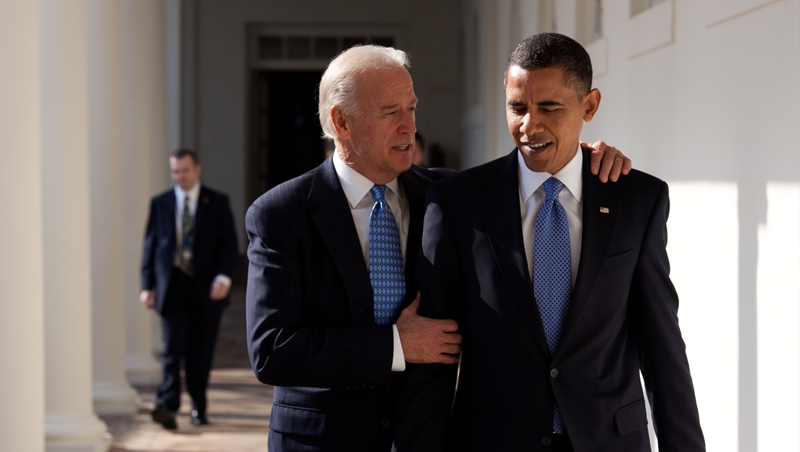
Bye to Biden: Farewell Joe?


I have written quite a bit about Biden. I don't necessarily agree with him on every issue, the man has his flaws. But he also seemed so human. His gaffes (which I always thought were over-played), his passion, his ready discussion of his own profound personal losses, showed that there was a real person.

The infamous incident in which he was giving a spontaneous back rub to the wife of Secretary of Defense Ashton Carter. Biden was panned for his inappropriate behavior and taken as the quintessence of the male habit of invading women's space. I am deeply sympathetic to women's complaints about men inappropriately infesting their space. But it's not clear that is what Biden was doing. He is, by all accounts, physical with everyone he meets. Plenty of male journalists have noted that an interview with Biden can involve a great deal of direct physical contact. He is, by all accounts, a very warm ingratiating person.

The Veep

He was an interesting vice president to study. 


He was chosen to help win the election. Unlike Carter-Mondale, Clinton-Gore, or Bush-Cheney, personal affinity and credentials do not appear to have been part of the selection equation. In that sense Biden was more akin to Reagan's selection of Bush - he had to pick someone, so first do no harm. (It should be emphasized, that for all of my research on vice presidential influence - how a potential running mate can help in elections is always the TOP criteria in vice presidential select. But with some of the other candidates, personal chemistry and experience was a significant consideration.)


Still, Biden worked hard to serve the president and support. It was a challenge, first because he had little standing the President Obama and second because of the legacy of Cheney - who was seen as playing an outsized role (a bit over-stated in the opinion of yours truly) - Biden need to show that he was not over-reaching.


It is difficult to assess how much influence Biden excersized. He travelled extensively and to difficult places - he was point man on Iraq (hardly a credit to his record - but I didn't say he was a magician), among other things. He was a key interlocutor with congress. He oversaw some important domestic initiatives. 


Perhaps the most interesting role was "running interference" in the decision of how much the U.S. should commit to Afghanistan. This is a fascinating role. Vice presidents usually reserve their advice for the president so they are not publicly seen as taking sides in inter-agency squabbles. There are good reasons for this - among others no one sees the vice president disagree with the president (and be over-ruled.) It preserves an appearance of influence. But in the discussions on Afghanistan, Biden took an active role. Secretary of Defense Robert Gates thought this was deeply unwise and was strongly critical of the vice president's role.


But Biden apparently did this at the president's request! In Obama's words:

Obama said that he and Biden discussed questions to pose to the military and intelligence community. “There were times where Joe would ask questions, essentially on my behalf, to give me decision-making space, to help stir up a vigorous debate. And that was invaluable both in shaping our strategy of an initial surge, to blunt Taliban momentum, but also to lay out a time frame for how long we would be there." 
It was a unique and interesting use of the vice presidency - effectively as an offensive tackle in a game of bureaucratic political football.

Other items were interesting as well. Biden's staff was closely integrated into the President's staff (maybe even more so than Cheney's) - at one point five Biden advisors were also deputy assistants to the president. Perhaps the best examplar of this rise of the VP's staff was the famous picture from the situation room watching the OBL raid unfold in which VPNSA Anthony Blinken is clearly visble.  Several Biden allies, including Tom Donilon and William Daley held key jobs in the White House. At the same time, several Biden staffers moved into comparable White House positions, including Anthony Blinken (from VPNSA to deputy NSA) and Jay Carney who first served as the VP's press secretary before taking the same role for the president.


Of course senior, experienced figures like Tom Donilon and Anthony Blinken might have had a prominent role in any Democratic administration. But still, it reinforces the role of the insider VP as a source for seasoned, insider staff.


Biden had a tough act to follow as VP. But under his stewardship, the office certainly did not return to its historic insignificance and grew in some modest, but interesting ways.


The Future
Having served the public for decades in the Senate and finally as vice president, Joe Biden can - with confidence - sit back into a comfortable retirement. Or is the vice presidency like the silver medal - the least satisfying of the winners. The bronze medalist is pleased to have won anything at all. The gold medalist is, of course, pleased. But what of the silver medalist - so close to the championship - but not the one who will be remembered.

Hopefully, Biden - who has had a life of great joy and great sorrow - will feel he has earned the right to rest comfortably on his laurels.


And yet...


We have seen both the institutionalization of the Ex-Presidency and a modest growth in the role of the ex-VP. Mondale served as Ambassador to Japan. Gore, who won the Nobel Peace Prize and as Oscar as a former VP,  has continued to advocate for action against climate change and has sought to reform capitalism. Cheney has also remained in the public eye.


Will Biden to work for issues he cares about? It is hard to imagine he won't. By all accounts and appearances he remains full of energy and passion. Will he establish a Biden Foundation (the initials BF have been at the start of some of his most memorable phrases) that advances middle class values and American internationalism?


It would be a fitting coda to a long and distinguished career. A great sunset on a helluva ride.