Thursday, October 30, 2008

Palin & The Coming Ice Age?

In Slate Christopher Hitchens (another incredibly prolific writer who I envy) reports that Sarah Palin attended a church where the preacher:
says that Alaska will be "one of the refuge states in the Last Days."
Funny thing about that...

Over twenty years ago, while I was in high school, I thought I was going to be a writer (or a stand-up comedian - I am grateful YouTube did not exist then to record my "musings"). My primary themes and subjects revolved around baseball and science fiction.

I began a novel about a Senator from Alaska, who, being part Eskimo knew the tundra like Bedouins knew the desert. This Senator had determined that a global ice age was on its way. In those happy days we could still chose our apocalyptic scenario - ice age, global warming, nuclear, or alien invasion.

So my part-Eskimo Senator was going to pull Alaska out of the Union in order to use its oil wealth to develop a new society that could continue surviving the glaciers and thus save civilization. I envisioned it as a political thriller, with independent Alaska joining OPEC and forcing an oil boycott until the US set them free.

OK - so I was a really weird kid, and it is probably for the best that I did not end up trying to become a fiction writer. Still, somehow I was on to something.

Tuesday, October 28, 2008

Implications of the VP as a Legislative Office

Glenn Harlan Reynolds, of Instapundit fame, has a thoughtful op-ed about the Vice Presidency in today’s New York Times, which is a shorter version of an article he wrote for the Northwestern University Law Review. (I can blog, I can write an op-ed, and I can write scholarly articles – but not all at once – oh, I envy him.)

His core argument is that the Vice President is in fact part of the legislative branch, and not the executive. The only Constitutional description of the Vice President’s role is to preside over the Senate and cast the tie-breaking vote when necessary – strictly legislative in function. Some folks are pretty excited about this, since it means Cheney was not out of bounds in claiming to be a “legislative officer” rather than an executive branch official (to avoid disclosing some documents), that Sarah Palin’s understanding in the VP debate of the VP's role was more accurate than Biden’s understanding, and more broadly that the chattering classes that scoffed at Cheney’s gambit are in fact wrong.

Interesting so far, but Reynolds takes this debate much farther, noting that if the VP is a legislative officer, then the President cannot grant him executive authority (due to separation of powers) and the Cheney model of an activist Vice Presidency is not permitted. Reynolds notes that it is unlikely that the Supreme Court will take on this issue – but that there are sound reasons for an inactive VP. Reynolds refers to the VP as a “spare tire” that “should be kept pristine, for when they are really needed.” When Presidents resign or are impeached, “a vice president who is enmeshed in the affairs of the president cannot offer a fresh start for the executive branch.”

These are sound arguments, and for most of the country’s history this was effectively how it worked. Vice presidents were marginal figures of little consequence. But, in an era of instant communications and truly global national security problems the Vice President needs to be “kept in the loop.”

Reynolds grants this, citing the infamous example of Truman who was unaware of the atom bomb when he took power (Truman was also unfamiliar with FDR’s diplomatic strategy for the post-war era.) But still, he calls for a VP not engaged in day-to-day governance.

Running the Numbers

Day-to-day involvement is an advantage for a VP who takes office on the death or incapacity of the President. But this same involvement is to the detriment of the nation in the case of an impeachment or resignation.

Eight presidents have died in office and there were at least four other close calls (Wilson was incapacitated, Eisenhower and Johnson were both seriously ill while in office, and Reagan was shot.) Only two Presidents have been impeached and a third resigned. So the odds would favor an engaged VP as the best course because Presidents appear substantially more likely to die than to be forced or resign from office. But, in general, people today are healthier and live longer (and Presidential security is far tighter) so the likelihood of a death in office – while always possible - is less and less likely.

At the same time (working with an admittedly tiny dataset) two of the three cases of impeachment or resignation have occurred in the last 35 years - so it can be plausibly argued that the future may hold more impeachments and resignations. In the case of Nixon’s resignation, the VP had resigned only a short time before (for unrelated reasons) thrusting an unelected President onto the scene. As difficult as this was, if Agnew’s crimes had come out a bit later, he might have become President (bad enough) and then been impeached or forced to resign in his own right. The Nixon-Agnew era was trauma enough, but actually having the Speaker of the House step into the Presidency would have been worse for the nation as a whole.

Recent history makes the spare tire metaphor for the VP’s role compelling and worth considering.

Middle Ground: Mondale vs. the Metaphor

But people are not tires and rarely do people become better at something while sitting and waiting. Is there some way of getting the best of both worlds? That is a VP engaged in the process but not overly enmeshed in it.

That depends on what being “in the loop” means. For the VP to sit over in their Senate Office and receive the daily briefings is better than nothing, but much of the policy process is informal – and the roles of specific personalities is essential. To truly be in the loop, the VP has to be in the process, dealing with the key players on a regular basis as debates take place and policies take shape. In an emergency transition the key people will still be there – it is important that the VP have a certain level of familiarity with them.

Reynolds cites Mondale approvingly, writing that he maintained a distance from public decision-making. However, Mondale was very engaged in the process – but he maintained a very light touch and was extremely discreet. Bush 41 (as Reagan’s VP) and Gore followed this model. (Gore did not jump to take on Gore-Chernomyrdin – he made sure it was the President’s idea.) While Gore’s links to Clinton may have hurt him in the 2000 elections, had Clinton resigned or been forced from office, Gore would have been accepted as President. In fairness, this may be due to the nature of Clinton’s offenses – he was not impeached over policy matters.

Unlike his activist predecessors, Cheney held no future political ambitions, consequently he was less concerned about being associated with particular policies and could operate with a heavier hand on the policy process.

Both Cheney and Mondale drew inspiration for their roles as VP from a similar source, the failed Vice Presidency of Nelson Rockefeller. Rockefeller, a well-known national figure, was selected by Ford to add credibility to his own accidental Presidency. As VP, Rockefeller attempted to run domestic affairs by taking control of the Domestic Policy Council – a high profile position. Instead it became a burden and Rockefeller himself became a lightning rod in the internecine White House power struggles. Mondale talked extensively to his predecessor and probably took the lesson of not being heavily associated with any given policies or taking on formal responsibilities and instead operating behind the scenes.

Cheney had been Ford’s chief of staff and ran interference on Rockefeller. He may have taken different - more operational - lessons about how to make the Vice Presidency a power base.

Returning to Reynolds’ analysis, the VP is an odd position – a prominent nationally elected office with almost no real power, but a very real and essential role. Simply warehousing the VP may not be an option, but in playing a policy role Vice Presidents should hold fast to the motto:
Discretion is the better part of power.

Friday, October 10, 2008

Agnew: The Rise & Fall of the Greek Veep

Thirty-five years ago a seminal event in the history of the Vice Presidency occurred. Spiro Agnew pleaded no contest to one count of income tax evasion and resigned from his office. In the speech (see the YouTube audio below) he refers to this resignation as insignificant in the context of America's peace and prosperity. But in fact Agnew's rise and fall had a profound impact on the course of the Vice Presidency.


While Agnew was a political cipher in the Nixon Administration and glad-handed by staffers to keep him away from anything important - his limitations and malfeasance set the stage for new trends in national politics.

The resignations in short order of both a Vice President (Agnew) and a President (Nixon)led to the "outsider" candidacy of Jimmy Carter. Since then, almost every Presidential election has featured an "outsider" candidate and anti-Washington "insider" rhetoric has become a stock feature of the American political scene. It took an outsider President to seriously consider an empowered Vice President - and that too has become an important (although still relatively new) feature of American politics.

It is possible that this would have occurred without Agnew's resignation - Nixon's resignation alone would have been sufficient to shock the political system (although considering how close the 1976 election was - Carter won 50.1% vs. Ford's 48% of the popular vote) Agnew's actions may in fact have been an important factor.

However, Agnew's resignation led to Ford's appointment and ultimately taking office not having won a national election to anything. The rapid turnover in the nation's highest offices, as Marie Natoli wrote in her American Prince, American Pauper: The Contemporary Vice Presidency in Perspective, changed views of the Vice Presidency, focusing on "the job which the Vice-President is really all about: the Presidency."

Bonus video: Agnew castigating effete snobs

Friday, October 3, 2008

VP Debate Review

It is all too easy to fall into the Pundit trap, and attempt to provide instant canned insights. With a hot Vice Presidential race (that includes a hot VP), the temptation is overwhelming. But the point of this blog (and my dissertation) is deeper than that – it is using the Vice President as a window into the national security process and trying to figure out how the Vice President can both be helpful to the President and better prepared for the Presidency if need be.

So I’ll try to push things that way, but some punditry is unavoidable.

Unfortunately, it isn’t easy. Reading all of the pundits before the debate, I realized, I had nothing new to say about it. Biden needed to not bully Palin and not gaffe. Palin needed to not gaffe and needed to stand there and take her lumps and not look to miserable doing it. There was a substantial chance that one or the other would not be up to it – but they both managed. Biden definitely won (was really quite masterful on the whole), but not by a knockout. Palin was good enough (having set expectations very low, not drooling was probably sufficient.) It is possible that radio listeners thought she lost by a huge margin, since her statements were not terribly clear or coherent. But combined with a nice smile and some winks, she was appealing enough on screen. In my preview of the Obama-McCain debate I described McCain’s lack of polish as a speaker, his apparent lack of artifice, as the most clever artifice of all. Perhaps the same will apply to Palin’s debate performance.

(It is possible that she is studying Tina Fey and imitating herself. On that note, my wife burst into laughter about ten minutes into the debate when she realized that the inevitable SNL sketch will feature Keenan Thompson as Gwen Ifill.)

Defining their Roles

There were a few times when the debate turned to the role of the Vice President. Ifill asked a specific question about the Administration’s claim that the Vice Presidency resides in both the executive and legislative branches. Biden rejected this as ridiculous. He explained that the VP’s role in the Senate is very limited and that the Administration had been out of bounds in its efforts to expand the VP’s role in the legislative branch. Palin (probably less familiar with the issue) said that she was hoping the Constitution would provide some flexibility in terms of shaping the Vice President’s role.

Interesting, in that light, that Biden said he would be the administration’s pointman on legislative affairs. The Senate is extremely jealous of its prerogatives and (starting with John Adams) has pushed back against Vice Presidents who tried to ride herd on the Senate. No less formidable a figure than Lyndon Baines Johnson (a true master of the Senate) was pushed from power when he became Vice President. Nelson Rockefeller, a formidable figure – but without Senate experience – tried act as lobbyist-in-chief and quickly became persona non grata in the cloakrooms where the real deals are done.

Vice Presidents who presided with a light hand did much better, and some Vice Presidents (such as Mondale) did some very careful lobbying. However, Vice Presidential lobbying can create questions about the Vice President’s impartiality as a Presiding officer. Therefore, the executive branch lobbying operations are kept separate from the Vice President, who serves rather as a point of contact between the two branches might be a better term for this role. Biden is an experienced Senator and it will be interesting to see how he adapts to this role.

Palin should be extremely careful in how she handles the Senate. If she displays the brash confidence for which she has become known, the Senate will quickly put her in her place. The last governors to preside over the Senate were Rockefeller and Agnew – both had troubles in that role.

Palin also said she looked forward to leading on the administration’s energy policy. It is certainly possible that she will have real authority in this role, but more than likely (particularly since she has no real DC powerbase or experience) this will be a throwback to the commissioner role that Vice Presidents played in the 1960s. These commissions were generally “feel-good” initiatives intended to make it appear something was being done but had little actual power.

As I’ve written before, an ongoing challenge for a McCain administration will be giving her substantial work that both makes use of her talents and prepares her for power – should that become necessary.

Monday, September 29, 2008

Debate Ephemera

I haven't posted my reactions to the debate yet, mostly because it was soooo boring. The most interesting issue of course was the fiscal crisis (which I don't really understand) but it was guaranteed that neither candidate would say much about it because of the ongoing negotiations in Congress.

However, I chided Obama for promising to go over the budget line by line in his speech in Denver. In the debate Obama was quite sober on this topic as McCain launched into his obsession with earmarks. A Senator who wants to invest his energy into fighting with the Air Force to save a few billion dollars on a deal for aerial tankers is really doing the American people a service. For a President to do the same is a huge waste of time. McCain wanted to freeze non-defense discretionary funding. The problem is that this represents something less than a third of the budget. Even a 10% cut would not resolve the fundamental issues and the earmarks themselves are less than $20 billion - a lot of money, but less than 2% of the entire federal budget.

The real fiscal action is in the non-discretionary spending (those enormous entitlement programs.) A Senator taking those on alone is Quixotic. These are the kinds of big issues that, while not easy, are on a scale that only the President can lead.

The McCain campaign would probably argue that the earmarks are an ethical issue, showing the growing corruption in Congress and their power to perpetuate themselves in office. Maybe, but not really. This Congress is probably not the most corrupt in history and generally the American people have assumed throughout American history that Congress is a corrupt, venal institution.

If McCain hopes to lead a massive struggle to reduce the federal government's role in the economy, more power to him. There is massive frustration among the Republican rank and file that the reformers they sent into office over a decade ago have presided over a massive increase in federal spending. But if McCain believe he make Congress a less self-serving institution then he is hoping for a change in human nature and that is more of a liberal project.

ADDENDUM

For a good overview of how the candidates stand on Pakistan, a particular interest of mine visit this fine, balanced entry at The Pakistan Policy Blog.

Friday, September 26, 2008

Clash of Styles: Pre-Debate Thoughts


McCain

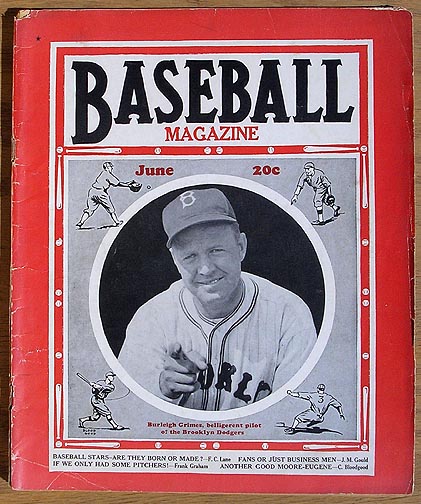
Black-jowled, swaggering, snarling, fighting against age and an overwhelming weariness, Old Burleigh Grimes took fame by the throat today and claimed her for his own.
This overwrought passage by sports-writing legend Red Smith describes the1931 St. Louis Cardinals World Series victory over the Philadelphia Athletics. But somehow I keep inserting the name John McCain. His career was made when, under duress, he was stripped down – past rank, background, and personality – to raw character. This is his stock-in-trade. He presents himself without nuance as unpackaged and raw. The Presidency is hell, but someone has got to do it and – as a man who has already been there and back – he is the man we can trust to take this on this awesome responsibility. He will make the tough calls, no matter

McCain is formidable in small groups and will be a skilled debater. But he is a lousy speaker. Despite a career in politics, he still struggles with the teleprompter. His speeches are free of artifice and come off as unvarnished truth and this, perhaps, is the greatest artifice of all.

Obama

Biden was pilloried for calling Obama “clean” because it carried the implication that for an African-American to be hygienic was somehow remarkable. But I think I know what Biden was trying to say. Obama is clean the way DiMaggio at the plate or Willie Mays patrolling centerfield was clean. Their motions were stripped of the herky-jerky of regular life, and focused and suited to the purpose at hand. DiMaggio’s swing was elegant, a word which can mean both simple and refined. Another word might be neat or graceful or clean.

Obama walked, with no apparent effort, into the national scene and to the nomination. Where Bill Clinton could read a grocery list and have such a good time that the listener enjoyed it too. From Obama’s lips the grocery list would be somehow uplifting.

The speed of Obama’s rise and the ease of his eloquence are deceptive. Willie Mays worked hard to control centerfield, his natural talent and grace only making it appear easy. Obama too has a hard core of real stuff to him.

What We Want

Do we truly expect to learn anything about their policies from this debate? Most people who follow politics even casually have a pretty good idea what each party seeks to do and what it believes in.

We also don’t really know what makes for an effective President. In some ways, the most we can do is try to eliminate the people who are not up to the job. The multi-year obstacle course we force our Presidential aspirants to traverse is an attempt to do this. I once heard boxing described as “running a marathon, doing trigonometry, and playing chess all at the same time.” Cubing that description perhaps gives a sense of what it takes to run for President.

The debate is just another obstacle. Part of it is stamina. Can the candidate stand their, head to head with their opponent, with the world watching, and not get flustered. Because if they can’t they aren’t up to the job. And then, with all that pressure, what do we see. Do the candidates show a flare of temper or condescension, a telling stumble, or a flash of wit or graciousness?

It is, in so many ways, an awful system. But I remember Churchill’s aphorism, “Democracy is the worst form of government – except for all the others.”

Thursday, September 25, 2008

Insider Picks

At a recent debate between surrogates for the two Presidential candidates the biggest applause line was when Obama's surrogate said that McCain's selection of Palin says it all about McCain's judgment.

What strikes me as interesting, in light of the Insider/Outsider paradigm that shapes the selection and roles of Vice Presidents, is how Palin she fits into the pattern of picks by insider Presidential candidates.

Overall, the VP picks by outsider candidates, starting with Carter, have been awfully Presidential. It includes Mondale, Bush 41, and Gore. Cheney was well-regarded when he was selected, and Biden (although some have their reservations) is also generally considered a good choice who leavens some of Obama's weaknesses. The one outsider candidate who lost, Dukakis, chose Lloyd Bentson - who most polls showed was the single most appealing figure on either party's ticket. On the basic issue of whether or not the VP was considered "Presidential" by the general public - all of these selections were successful. Six for six.

Now consider the VP picks by the insider candidates. Muskie, Kemp, and Lieberman were all generally considered sound, if - in the cases of Muskie and Kemp - unremarkable. Then there was the McGovern fiasco. McGovern had two choices, first Eagleton who then withdrew after it was revealed that he had undergone electro-shock therapy. Then McGovern picked R. Sargent Shriver, who had never held elected office before. Strictly, speaking, Eagleton was actually a solid pick based on resume - but he did end up becoming a problem for the campaign. Ford also had two picks, first his choice when he succeeded Nixon the Presidency and then his choice when he ran in 1976. Rockefeller was chosen in great part because he was considered eminently qualified to be President. However, he ended up not working out, and when Ford was nominated he chose Bob Dole. Based on his resume Dole was a sound pick, but he blew it in his debate with Mondale.

Then there are a series of picks which were made for extremely political purposes. In this, Nixon (unsurprisingly) takes the cake. He chose Agnew because he was an "ethnic" and held onto him as impeachment insurance. When Agnew resigned, Nixon chose Ford a sounder choice on the whole, who actually did serve, reasonably well, as President.

Mondale chose Geraldine Ferraro, a three-term congresswoman from New York. It was a historic pick. But for some it looked like a transparent attempt to appeal to women voters and, because the National Organization of Women had lobbied hard for a female running mate, it made Mondale look like he had caved under pressure.

Four years later, Bush chose Quayle. In fairness, based on resume Quayle was not a bad choice, he was into his second Senate term and had served two terms in the House beforehand. However, Bush reportedly choose Quayle figuring that a young and good-looking running mate would lend a certain appeal to his ticket. Whatever his virtues, Quayle appeared callow on TV and was generally considered a liability. In 2004 Kerry chose John Edwards, who had served a single undistinguished term in the Senate. Edwards did not make any missteps that would register on the Quayle scale. But he spent a fair amount of effort trying to convince voters that he was not too inexperienced in his 2008 run (and that was against Barak Obama...)

And then there is Sarah Palin.

Out of 13 VP picks by insider Presidential nominees, seven had serious credibility problems with substantial components of the general public.

Certainly one can quibble with some of my calls. Maybe John Edwards or Ferraro were regarded as solid picks. Sill, even with the most generous judgments of the insider's choices and more critical judgments of the outsider candidates' selections the the discrepancy is outstanding. There have been no outsider candidate choices equivalent to Agnew, or even Quayle and Ferraro.

The overall trend appears that outsider candidates think very carefully about who they want to work with and who could become President. The insider candidates want to get women to vote for them.